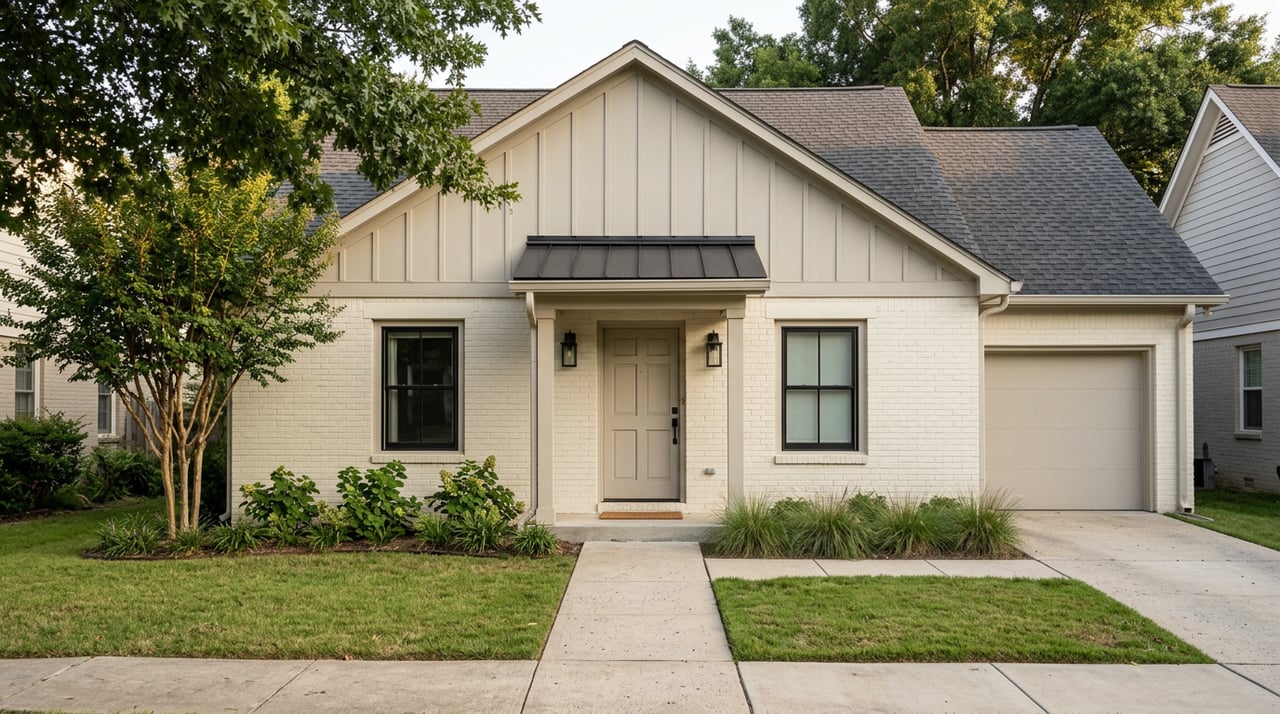
Open three browser tabs and search for Wesley Heights home prices and you'll get three different answers. One site's sold-data feed shows the median price falling more than 20 percent over the past year. A second site, pulling from active listings instead of closings, shows prices essentially flat. A third lands somewhere in the middle. All three claim to describe the same eight or nine blocks of Charlotte's West End.
None of them are wrong. That's the part worth sitting with if you're comparing Wesley Heights, Enderly Park, or the broader Freedom Drive corridor against other close-in Charlotte neighborhoods. The number swinging 20 points in a year isn't measuring the market getting worse or better. It's measuring which two or three houses happened to close in a given month, in a neighborhood where a 1930s craftsman bungalow and an $800,000 new-construction farmhouse can sit on the same street.
Three Sources, Same Nine Months
Here's what the data actually showed heading into late summer 2026:
| Source | What it measures | Window | Figure |
|---|---|---|---|
| Sold-price feed | Closed sales, median | Three months ending May 2026 | $409,000, down 21.1% year over year |
| Active-listing feed | List prices, median | June 2026 | $495,000, down about 2% year over year |
| Independent market guide | Blended estimate | Early 2026 | $420,000, with a stated range of $260K to $900K+ |
Same neighborhood. Same rough time frame. A spread of nearly $90,000 depending on which feed you trust, and a headline year-over-year trend that reads as either a serious correction or a rounding error depending on which number you cite.
The sold-data feed also disclosed something the headline percentage doesn't: six homes sold in Wesley Heights in May 2026, up from four the year before. That's the whole sample. A single $1.1 million historic restoration or a cluster of entry-level bungalow sales in the same month can move a median by tens of thousands of dollars without anything in the neighborhood actually changing. Days on market told a calmer story, averaging 38 days that spring compared to 43 a year earlier, which is the kind of detail that gets lost when a 21% price headline is sitting right next to it.
Two Kinds of Houses on the Same Block
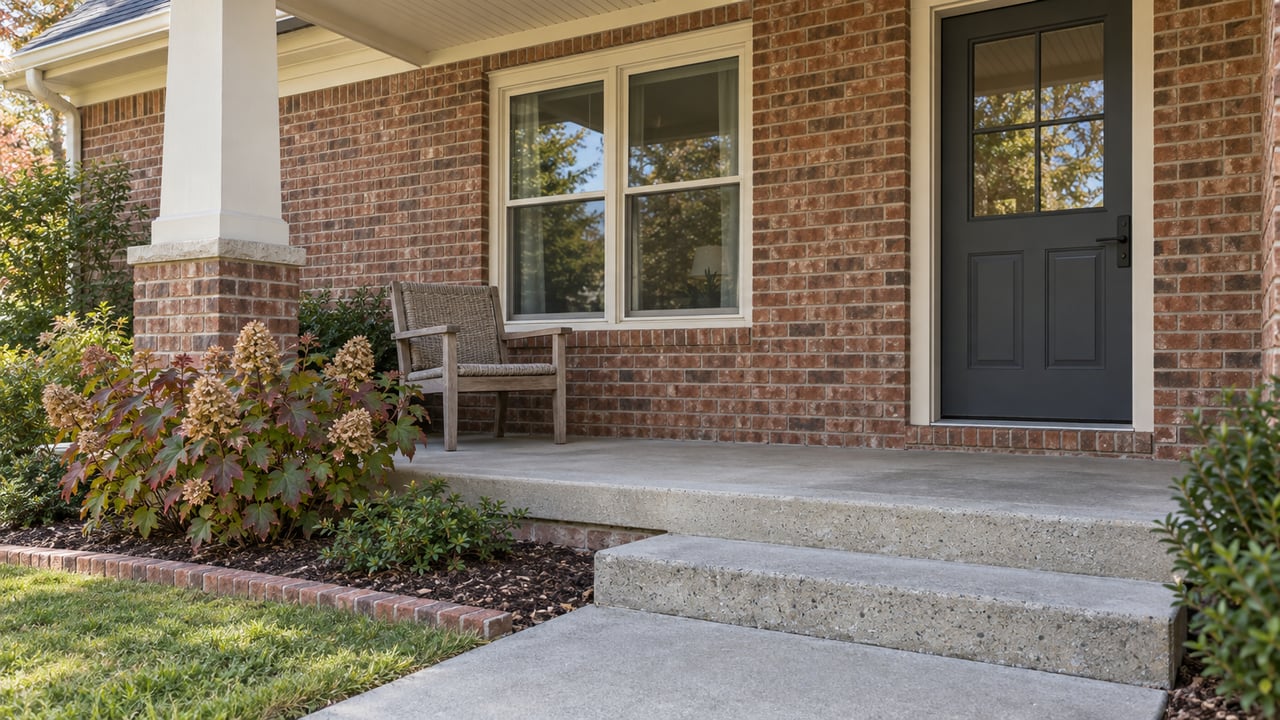
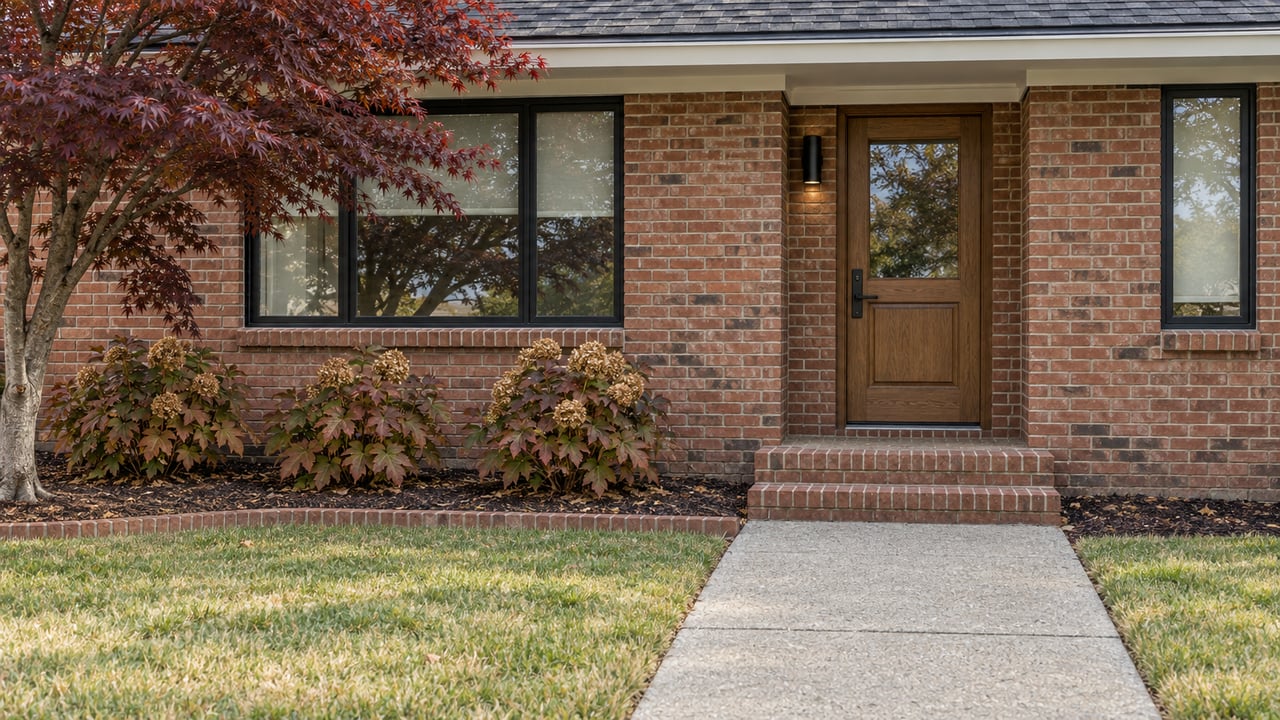
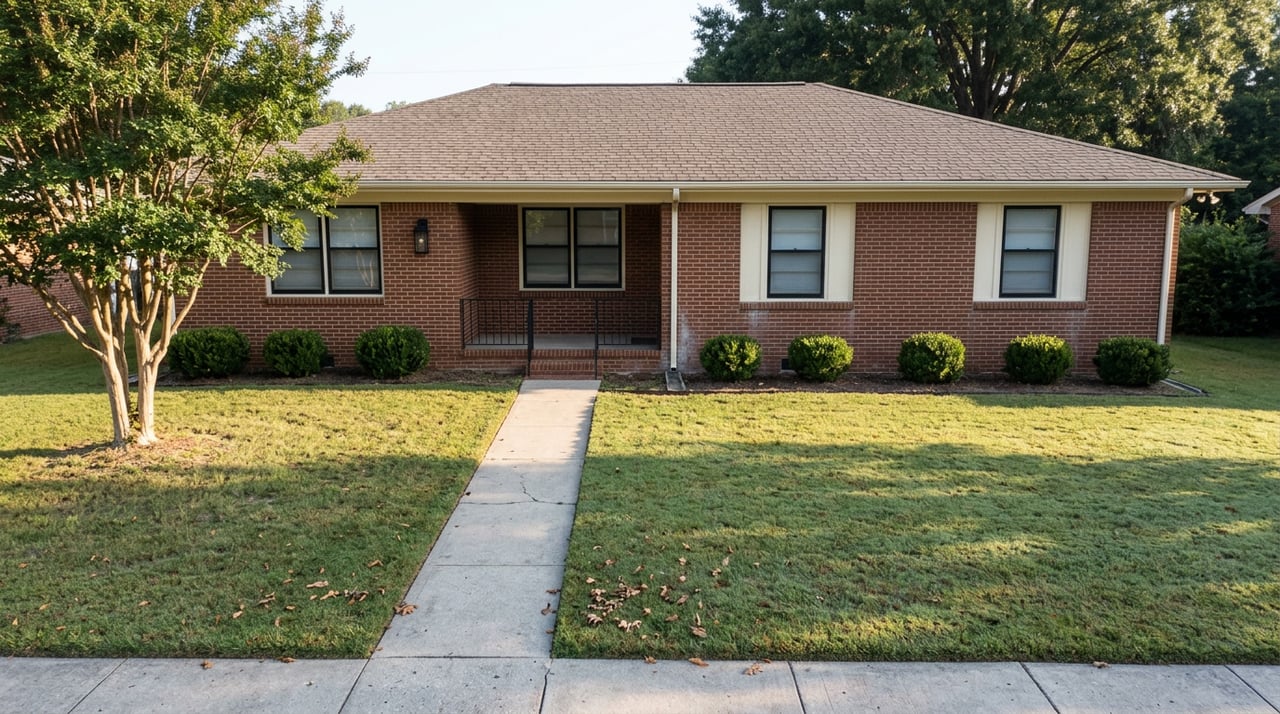
The reason a six-sale month can swing so hard comes down to what's actually for sale. Wesley Heights and neighboring Enderly Park aren't uniform inventory. They're a historic core of 1920s through 1940s Craftsman bungalows sitting directly alongside a wave of new construction, often on the same street.
On one end: original bungalows, some still renter-occupied, trading in the $250,000 to $400,000 range depending on condition. On the other: infill projects like The Enclave at Enderly Park, a community of fifteen new farmhouse-style homes starting in the low $800s. In between, Enderly Park's broader sales data over the past year put the average sale price around $478,000, a figure that only makes sense once you know it's blending both ends of that range rather than describing a single, consistent product.
Investors are already pricing this in. One four-unit listing marketed this year in Enderly Park pitched itself on below-market rents and an unfinished basement that could be permitted into a fifth unit, the kind of value-add math that only works because the neighborhood still has original 1940s and 1950s stock sitting next to new builds worth double or triple the price. Several buildable lots in the Lakewood subdivision, zoned N2-B with city water and sewer already in place, were marketed the same way: raw upside for whoever builds next, in a corridor where "next door" might already be worth $700,000 more than the lot itself.
A median price is only useful when the houses behind it look like each other. In Wesley Heights right now, they don't.
What's Actually Driving Change Here
If the price data is noisy, the development pipeline isn't. Three things are reshaping this corridor in ways a single month's median can't capture.
Savona Mill. Portman Holdings' 27-acre redevelopment of a 105-year-old textile mill on South Turner Avenue has moved from announcement to occupancy. Charlotte-based accounting firm BGW CPA signed the project's first office lease, and design firm BSA followed with a lease of its own in October 2025, both moving into space fronting the Stewart Creek Greenway. The 319-unit Vera at Savona Mill apartment community is already delivered, with more housing planned. And in May 2026, Portman announced Savona Food Works, a 30,000-square-foot food hall from operator Robert Montwaid set to open in 2027 with roughly 25 food stalls, a full restaurant and bar, and a rooftop bar, making it the sixth food hall in Charlotte.
Camp North End's next chapter. Atlanta-based Jamestown took a stake in the 76-acre former Ford and missile plant campus in February 2026, bringing entitlements for up to 3.2 million square feet of future development, more than six times what's been built out so far. Then in August 2026, Charlotte's transit authority formally approved a Camp North End stop on the proposed Red Line commuter rail, the line that would eventually connect Uptown to Mooresville. Business owners on site, including Eggroll Company owner Daphne Alexander, told local reporters they're already anticipating more foot traffic. Worth saying plainly: the Red Line is still in early design, with no construction start date or opening year confirmed, so this is a real approval, not a countdown clock.
The corridor filling in around both. None of this is happening in a vacuum. The blocks between Savona Mill and Camp North End are filling with the kind of small, specific businesses that don't show up in portal listings:
- Enderly Coffee Company and Platform Coffee, the neighborhood's daytime anchors
- Noble Smoke, a well-known Charlotte barbecue destination
- Rhino Market and Deli and Pinky's Westside Grill, both long-running West Charlotte staples
- Blue Blaze Brewing, sitting directly off the Stewart Creek Greenway
- Restaurant Constance, Azul Tacos, Streetcar 57, and Bossy Beulah's, all within walking distance of new construction in Enderly Park
- Station West, home to The Batch Maker and Backdrop Coffee, anchoring the district's creative office and retail scene
That list matters more than a single month's median. It's the difference between a neighborhood that's speculative on paper and one where actual foot traffic, actual leases, and actual restaurant openings are compounding at the same time prices are getting reported inconsistently across portals.
What To Check Instead of the Headline Number
If you're comparing Wesley Heights or Enderly Park to another close-in Charlotte neighborhood, a single median figure from any one site isn't enough to act on. A few things are:
Look at days on market before you look at price. A 38-day average tells you more about real demand than a 21% swing built on six transactions.
Ask what specifically sold. A bungalow at $280,000 and a new build at $850,000 closing in the same month will produce a median that describes neither house accurately.
Separate approved infrastructure from proposed infrastructure. The Camp North End Red Line stop is approved. The line itself has no construction date. Price in the difference.
Zoom out one level before you trust a hyperlocal number. Mecklenburg County's broader 28208 zip code, which contains Wesley Heights and Enderly Park along with a wider swath of Northwest Charlotte, showed a median sale price of $337,000 in December 2025, up a modest 2.4% year over year, with 155 homes sold that month compared to 122 the year before. That's a calmer, more stable trend than anything the block-level data shows, precisely because the sample is bigger.
A Few Questions Worth Asking Before You Act
Why do different sites show such different prices for the same neighborhood? Some measure closed sales, others measure current list prices, and in a market this thin, a handful of transactions can swing the median by tens of thousands of dollars in either direction.
Does new construction pricing mean the older bungalows are losing value? Not necessarily. The two products are trading in different tiers of the same market. A rising average sale price can reflect more new construction closing, not existing homes appreciating.
Should I wait for the Camp North End Red Line stop before buying nearby? The stop has cleared a planning hurdle, but the line has no construction start date or opening year. Treat it as a long-term signal, not a near-term catalyst.
If you're weighing a purchase or an investment in this corridor and want help reading what a specific listing's price actually reflects, rather than what a portal's median implies, Anthony Swain works this side of Charlotte regularly. Let's Connect.